

Shmata Ladies
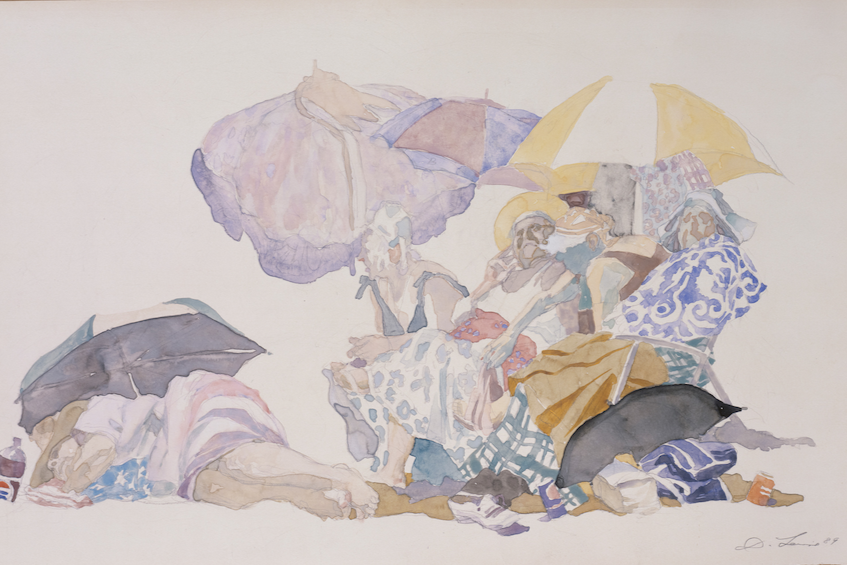
Four Shmata Queens, 1984Shmata Queens
Each year they would say, “Ya know, lest veek, dere vuss a men chust like you.”
I would patiently tell them that it was me.
The “they” that I refer to is a dwindling group of elderly women: Shmata Queens of Coney. The “shma ta,” or “rag,” not only refers to the head cloth, but also to the bathing suits — faded and misshapen by molding to aged, deformed bodies in the sun. They are now comfortable with me sketching in their midst and only occasionally ask to see what I do.
Once, as I was finishing a drawing, my model said, “Dere is vun ting you kent ketch about us.”
When I inquired what that might be, she answered, “How much ve eat.”
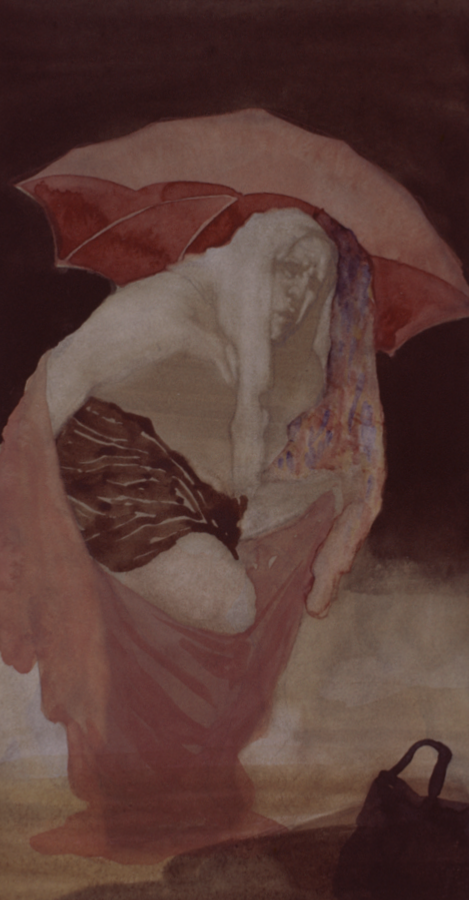
Shmata Lady Changing On the Beach
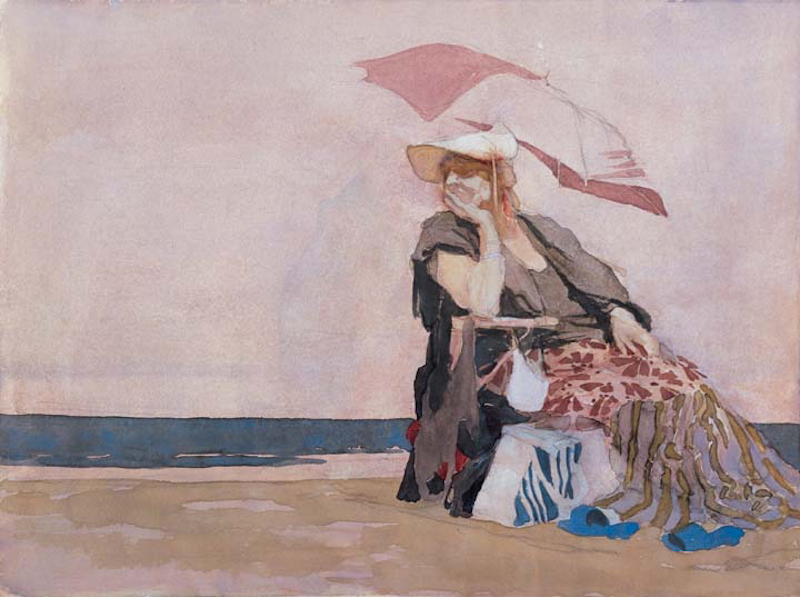
Coney Sentinel

A Shmata Lady in a Robe, 1986
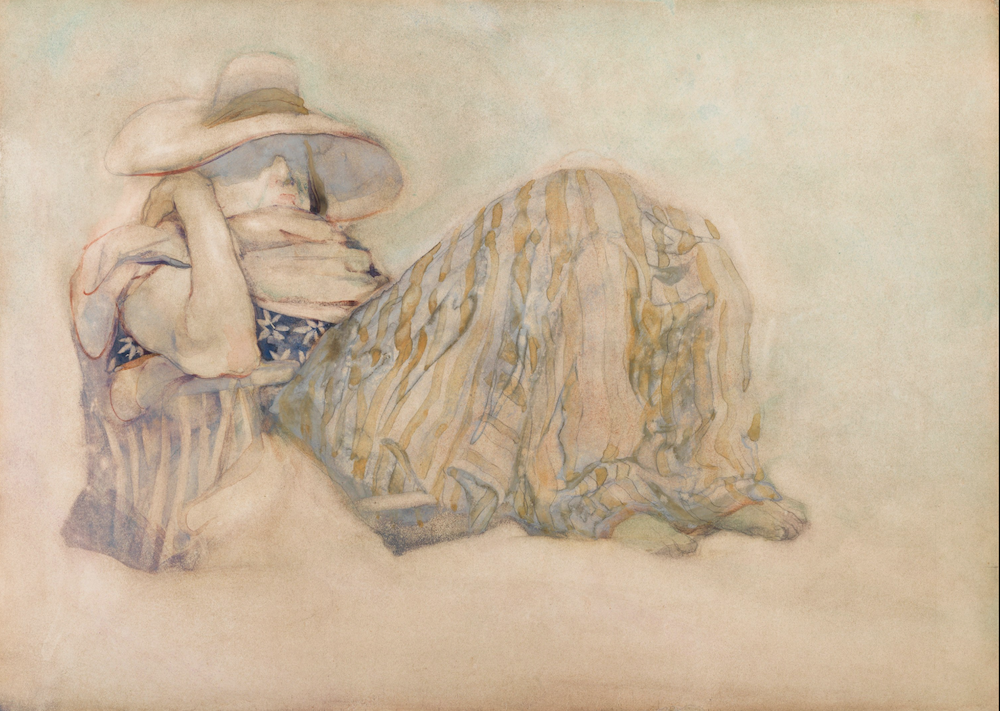
Old Glory Faded
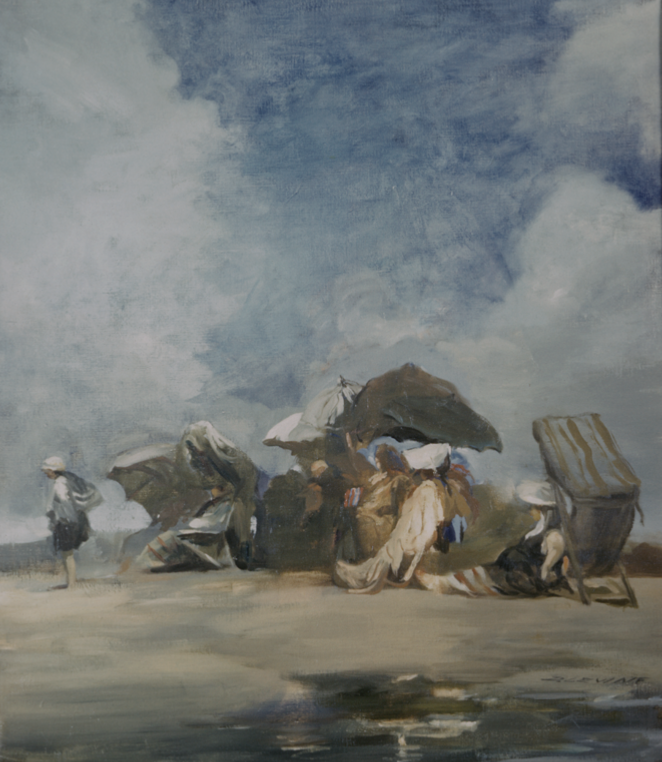
Shmata Encampment at Coney

Two Shmata Queens, 1984On Aesthetics
She was seated on a towel, astride a jetty rock, talking to another “shmata” lady of Coney.
In the midst of my sketching her, she spotted my studied ogling.
Her friend slowly circled behind me and bobbed her head in affirmation. “Yes, he's doing you.”
I maintained a feigned innocence and continued to draw.
Upon finishing I stood, gathered my equipment and was about to depart when I made my fatal mistake. I looked at her and was commanded to approach and reveal.
I all but bowed. After all, I did owe her something.
She took my sketchbook, opened it to the page - I braced myself for the criticism.
She said, “Oy! I knew I was in a beautiful position.”
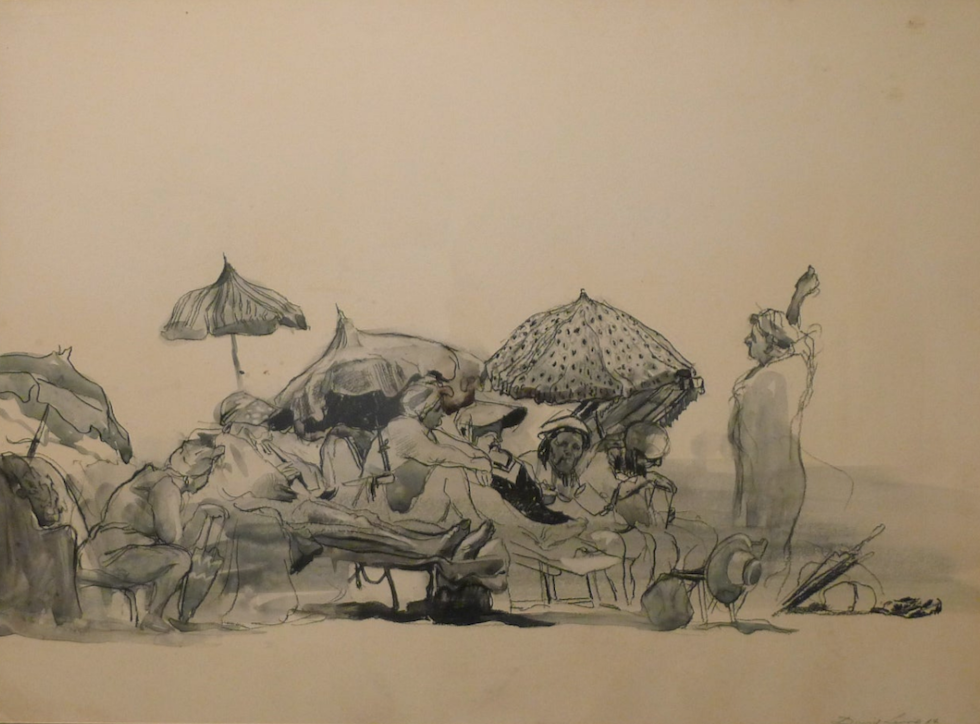
Solomon Rose
She called me cousin because our names were derived from the priestly tribe, Levy. Rose, a Greek Jewess, spoke six languages. She was frequently sought after for her wisdom. Problems and questions were presented to her by other women who sat around her, as if forming a court. Each wore a “shmata” (rag) on her head, tied in a way that revealed her national tradition.
On one, the knot was in front, on the forehead. On another, in back. And so on. Rose’s was distinct in that it was formed by an ancient white towel made secure as a turban by blue strips tied around it.
One day, as I sat sketching nearby, an elderly male habitué, whose skin could have been made into shoes, singled out a younger, attractive woman.
“Shoiley, let's go for a jog, Shoiley.”
“Okay, Sam.”
Slowly, they loped off toward the harder sand near the water’s edge.
Waiting until the two were out of earshot, the women moved closer to each other, forming and intimate circle, their faces knowingly smiling, their shmata-clad heads bobbing from side to side.
“What!!??” one woman exploded.
“It’s like dis,” came the answer. “I'm merried to a Lubovicha,” (a very religious man). "End, if he'll see I got a sunboin, he'll know det I took off clothes."
All now turned toward Rose for her insight.
“Listen,” she said. “If he’s so religious, he wouldn’t look.”
Line up on Coney Island, 1964